
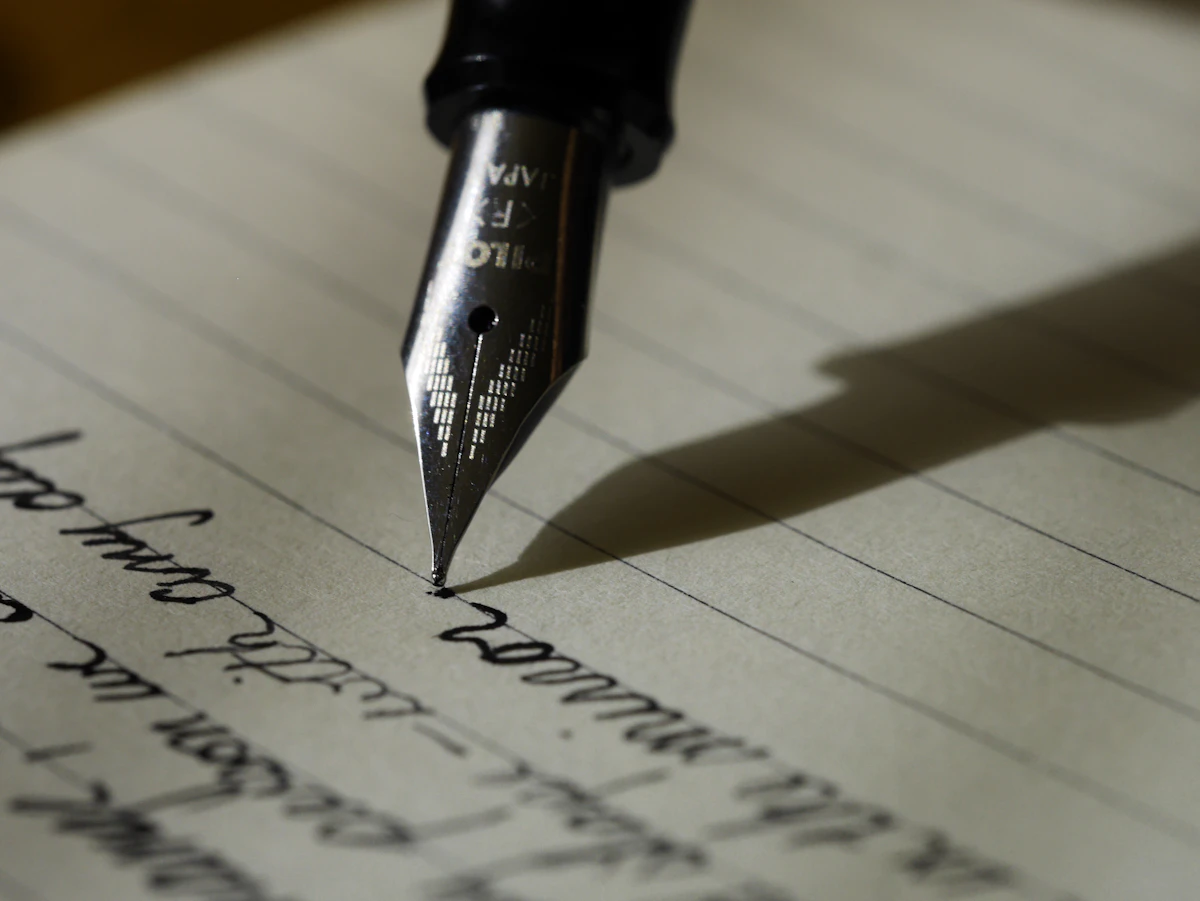
Your Short Story Can Keep a Secret. It Must Still Show a Change.
How much can a short story leave unexplained? Use a simple scene test to distinguish productive ambiguity from missing information in your fiction.
Curated editorial perspectives, personal essays, and cultural observations from contributing writers across the literary community.
How much can a short story leave unexplained? Use a simple scene test to distinguish productive ambiguity from missing information in your fiction.
Elisabeth Jaquette’s work shows why translator credit matters. Explore the decisions behind translated books and a simple way to improve book reviews.
A harsh portrayal of a tech billionaire can leave his business unexplained. Here is how to examine what a film reveals about technological power.
Discover Paul Zacharia’s 50 Stories through an authorised excerpt that opens questions about family interference, suspicion, and narrative perspective.
Understand money in Jane Austen’s novels: how annual income, inherited fortunes, and financial dependence shape marriage, refusal, and character choices.
Preview Mike Flanagan’s Carrie adaptation through its treatment of bullying, isolation, responsibility, and the possibilities of a television format.
Explore The Lost Children of Tuam, Catherine Corless’s research, and why historical drama must be distinguished from the documented record.
Andrew Scott plays Ian Charleson in Elsinore. Explore the film’s premise and the challenge of portraying the actor behind a celebrated Hamlet performance.
Revisit The Craft at its 30th anniversary through its treatment of teenage exclusion, female friendship, supernatural power, and the cost of obedience.
Explore the 2026 National Book Awards finalists across five categories, with a reader’s guide to discovering books before the winners are announced.
Frank Oz’s horror musical makes ambition charming, then gives it an appetite.
A new American Library Association list puts decades of censorship disputes together. Its significance extends beyond the titles.
A shutter registers light across a fraction of a second, not what you felt. Why we mistake camera exposure for human memory—and how contact sheets prove it.
Learn how audience, fluency, and social pressure shape character voice. Use a practical dialogue exercise to write more believable conversations.
A quiet, sharp-edged poem and accompanying essay capturing the physical weight of cold and silence in a high-altitude Uttarakhand stone hut.
A village's sacred, private autumn ritual is dragged into the public eye by well-meaning preservationists, leaving the traditional courtyards empty and silent.
A quiet committee-room battle over a housing society's Ganpati festival exposes the friction between traditional clay craftsmanship and the cheap, indestructible allure of modern plaster.
In a Dhamrai metal workshop, an elder craftsman clings to the slow, lost-wax method of casting brass while his younger partner pushes for the speed of modern sand molds.
At Motibaug Akhada and the gates of Panhala, physical survival precedes the impulse to turn manual labor into an ideological sermon.
Verses on petrichor, cooling brickwork, and the quiet arrival of evening rain across north Indian rooftops.
You’ve reached the end of the daily deck • Words worth remembering.
WritOn is an independent storytelling and publishing platform designed for thinkers, essayists, poets, and discerning readers who value craftsmanship, intentional writing, and distraction-free literature.
Yes. The WritOn Android mobile application provides native offline reading, allowing users to save stories, essays, and poetry to their offline library for uninterrupted reading anywhere.
Authors compose stories using WritOn’s distraction-free editor with markdown support, publishing directly to categorized discovery feeds and reaching a global literary community.
Yes, WritOn is completely free to read on the web and available as a free download on Google Play, providing open access to independent essays, poetry, and stories without paywalls.